
My Path to Publication
From beginning to end, publishing a book is not for the faint of heart!

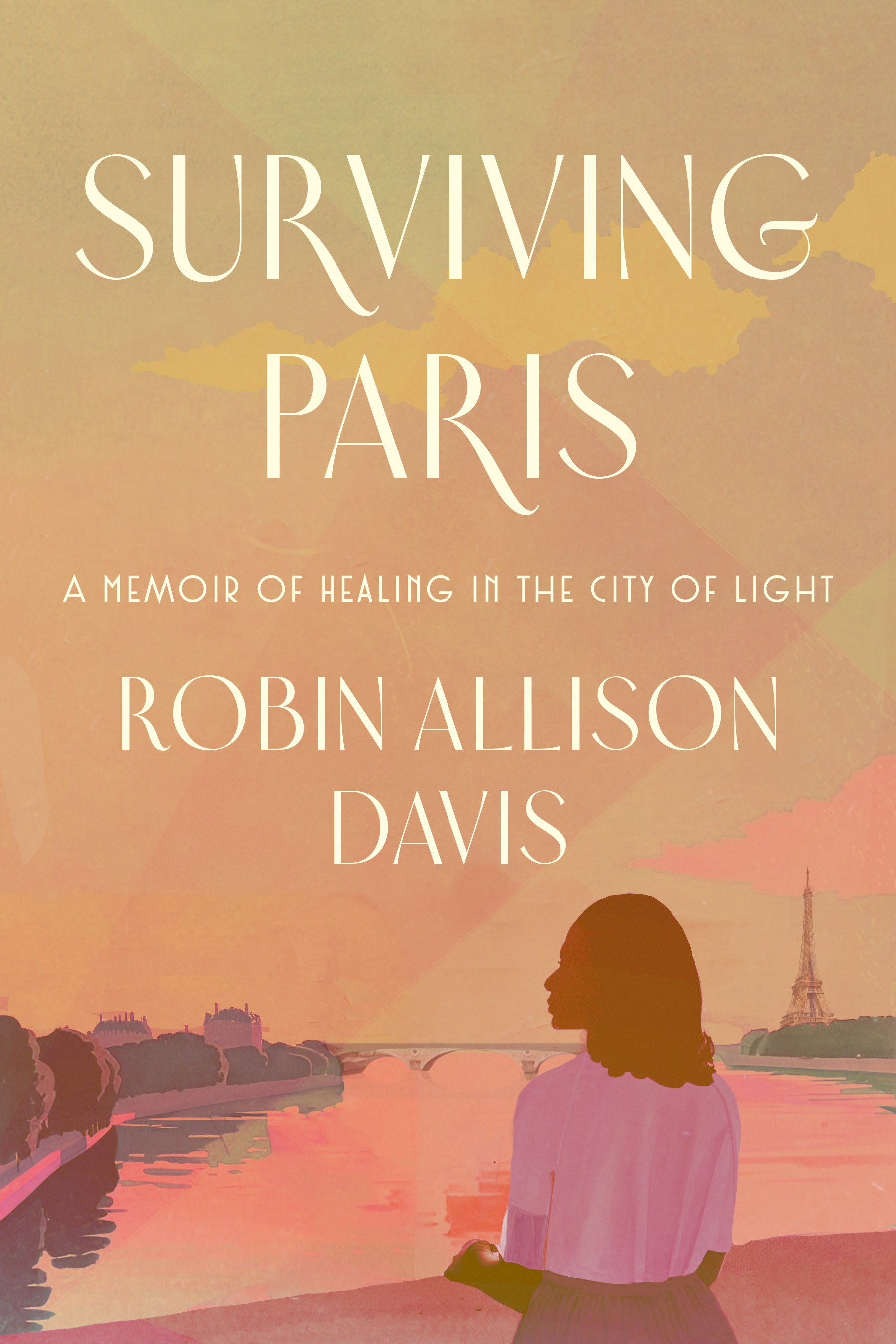
Welcome to On the Other Side by Robin Allison Davis! This newsletter features anecdotes, resources, musings, and more from Robin, a two-time breast cancer survivor and an American expat living in Paris. Robin is navigating life not only on the other side of her cancer journey but also on the other side of the Atlantic. You can preorder Robin’s memoir, Surviving Paris: A Memoir of Healing in the City of Light, here.
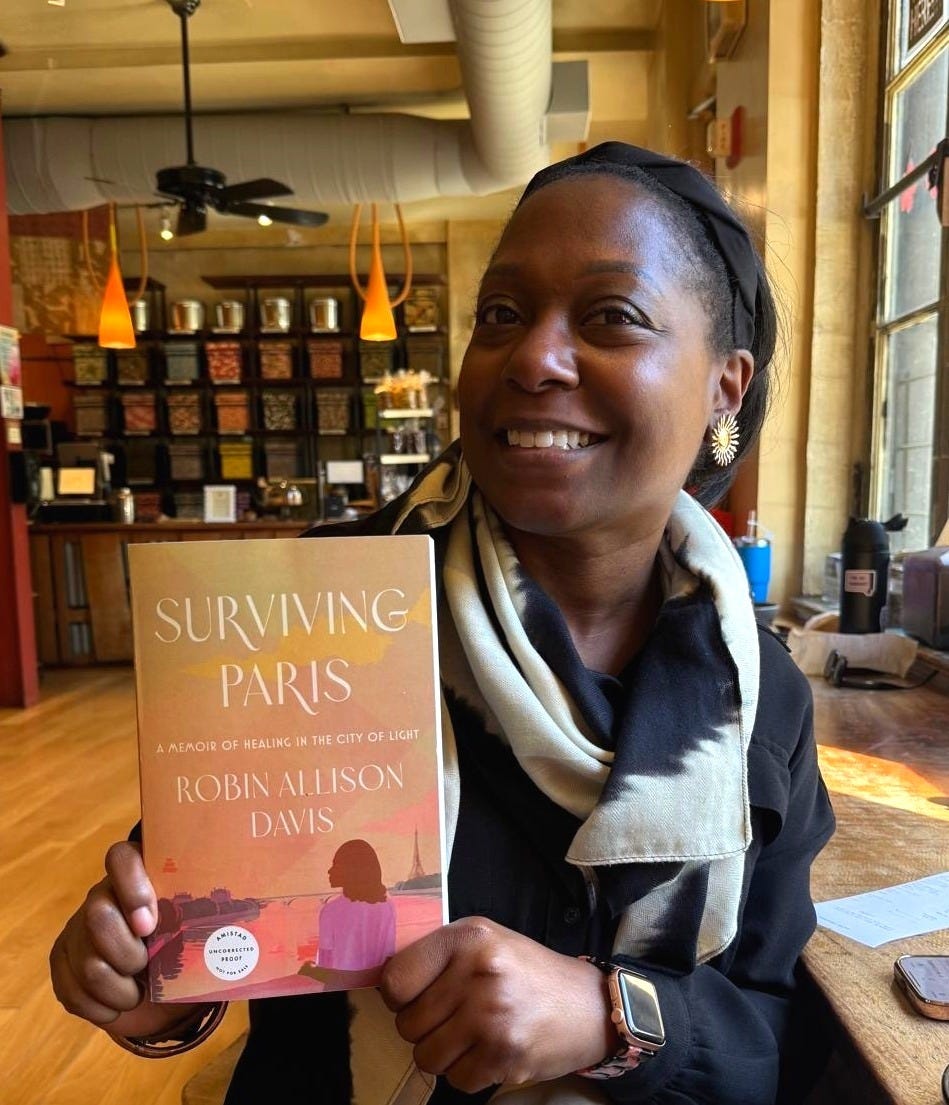
One of the things I’m asked most often these days is about my path to publishing my debut memoir, Surviving Paris: A Memoir of Healing in the City of Light. It’s been a journey seven years in the making, and the book comes out in just three months! No time like the present to pull the curtain back on how exactly this all started and how it works.

This post discusses traditional publishing - if you’re interested in self-publishing, I recommend reading Anne Ditmeyer’s post here on how she did it.
Step One: Writing the Book or Selling on Proposal?
When you sell a memoir or other non-fiction books, you don’t necessarily have to write the entire book first. I decided to sell my book on proposal for a variety of reasons. The top reason for me was that I didn’t want to go through the emotional violence of writing a book about the worst moments of my life, and then it never selling or going anywhere. The idea of reliving that level of trauma for nothing was not appealing. It was better for me to sell first and then dive into my darkest moments. I also knew that, as someone who has several half-written novels in my virtual desk drawer, it would be advantageous for me to write my memoir with a hard and fast deadline. Sure, there’s always the risk that you don’t finish - but be prepared to pay back your advance if you don’t.
This doesn’t mean that selling on proposal is easy - you still need to ensure that you actually have a story to tell. A story that is unique, well-conceived, and marketable. Your proposal should include a bio, a synopsis, a chapter outline, and most importantly, a sample chapter. You have to demonstrate proof of concept and your writing ability. I used a few proposal templates to craft my proposal. Jane Friedman has a great post on writing a proposal, plus a template to follow.
I started writing my book/proposal in 2018, after the first time I beat cancer. I dropped the idea for about a year and picked it up again in 2021, after I beat cancer the second time.
Once I completed my proposal, I reached out to a few trusted friends to read and re-read it. Although I didn’t do this, proposal editors are available who can help you develop and improve your proposal so that you can submit it to agents with the best possible product. After a few rounds of edits, in January 2022, I decided I was ready to find my agent.
Step Two: Finding an Agent
Once the proposal was as polished as I could make it, I began my search for an agent.
I know many, many people who did not go through the “normal” route of finding an agent. Literary agents often contact journalists out of the blue to represent their forthcoming works. I know people who received major press for another project and/or placed a well-written opinion piece in a major newspaper, and a literary agent subsequently asked to represent them. I know people who had connections through family and/or friends, and literary agents asked to represent them because of that. I know people who attended writer's residencies, workshops, and conventions and secured their agents in that way.
All of that is to say that there are numerous paths to finding an agent, but the most common one is the querying route, which is what I did. Querying agents can be a brutal process, but don’t beat yourself up if it’s not working out exactly as you planned, because, as I said above, a lot of people are getting agents through other routes. You have options! (Told you I was pulling back the curtain!)
However, before we begin the query process, regardless of how you find your agent - whether you queried them or if they reached out to you - you need to determine which agents would be the best fit. I created a Publisher’s Marketplace account, where you can see which agents are making deals in your genre. It shows deals of all sizes, but it’s also worth noting that not all agents report their deals. Via Publisher’s Marketplace, you will not only see if an agent has recently made a deal but also what type of author they’d like to represent. From there, I crafted my list of agents to query.
So what is “querying”?
Querying an agent means contacting agents and asking them to consider representing you. Each agent has their own criteria for queries - some use QueryManager, some use Submittable, some want only emails, or just their website contact form. Some agents want the first chapter of your book, while others only want the proposal. It’s essential to be detail-oriented and query according to their exact requirements.
Querying can take a long time due to the volume of emails agents receive, and often, you may not even hear back from them. Unfortunately, ghosting has become the norm. QueryTracker is a website that tracks agents’ response times and helps you track your outstanding queries—some you can even query directly from there.
I started my query process in rounds in January 2022 and signed with my agent in July 2022. I had three agents interested in representing me, and I interviewed all three teams. I researched their work, spoke with a client from each one, and made the best decision for me. Whether you obtain an agent via querying or them reaching out to you, it’s important to find the best fit for you. As a debut author, I knew I wanted someone who could do a fair amount of handholding and an agent who is more editorial. What does that mean? I’ll get to that in the next step.
Note: It should go without saying, but please be aware that no money is involved in any part of this process. Any literary agent who says you need to pay them for representation is not a legitimate agent. They get paid when you sell the book and receive your advance. Check out the Writer Beware website for publishing scams to be aware of.
Step Three: On Submission
You have to have thick skin in publishing - rejection comes very easily. All said - if you thought your query process was tough, it’s a cakewalk compared to being “on submission”.
As I mentioned before, I wanted a more “editorial” agent. After signing with my agent, we spent a month or so reworking the proposal to make it more marketable. Finally, in September 2022, we went “on submission”.
“On submission” means your agent is sending your proposal to a list of editors at publishing houses. Ideally, your agent has relationships with all of these editors, so they’re more likely to read their emails and trust their judgment. My proposal was sent to the “Big Five” publishing houses: HarperCollins, Penguin Random House, Simon & Schuster, Hachette, and Macmillan. That doesn’t mean it only went to five places - each publishing house has imprints, which means that the proposal can be sent to multiple offices within the same publishing house.
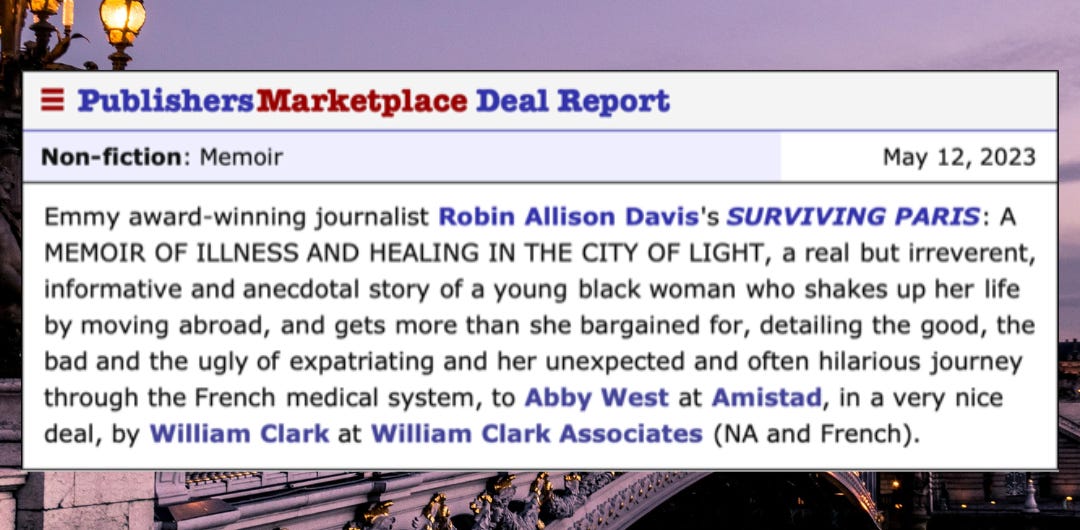
Amistad, the oldest imprint devoted to titles for the African American market at any major New York publishing house, showed early interest in my proposal. After a discussion with my agent, we had a Zoom call to discuss their vision for my book. After a bit of delay, I signed my contract with them in April 2023. The advance was split in two, with half received upon signing and the other half upon acceptance of the final manuscript. And now the real work begins! I was given a deadline of March 2024 to submit my final 80,000-word manuscript (publishing counts in words, not pages).
Step Four: Writing and Revising the Book
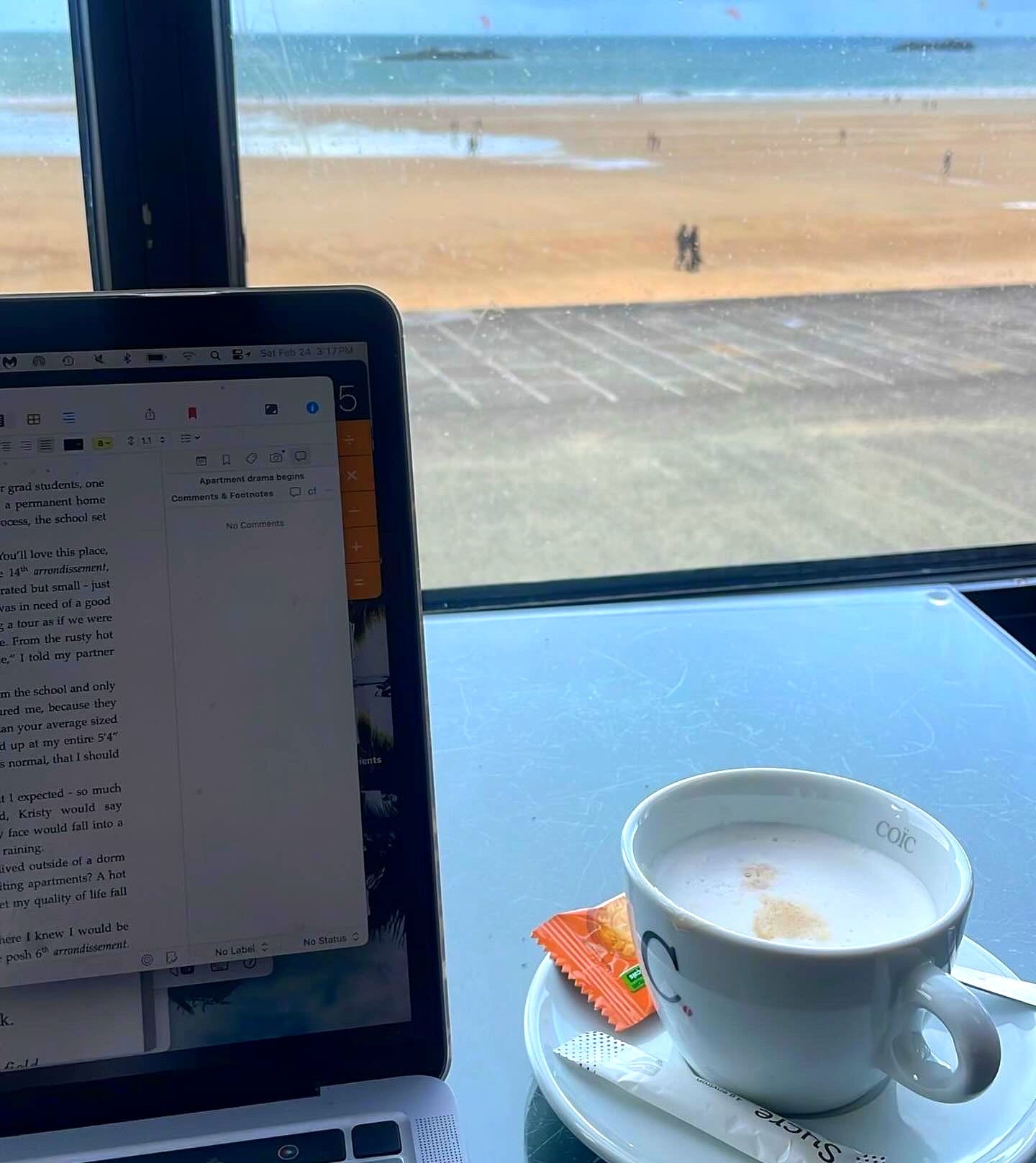
Writing my book was one of the most challenging and enjoyable things I’ve ever done. I wrote at home, I wrote on planes, I wrote in the American Library, I wrote in Soho House (a few different cities!), I wrote in coffee shops, I wrote in public libraries, I wrote at work, I wrote on my phone while walking, I wrote on trains, I wrote in Portugal, I wrote in Spain, I wrote in the US, I wrote in London, I wrote in Italy, I wrote in the Netherlands.
The deadline crunch is real.
This post is getting incredibly long, so I won't elaborate on the writing process (if you’d like me to write a separate post on that, please let me know). Having my proposal with an outline made things easier, but in the end, the final form of Surviving Paris differed from the proposal I initially sold. And that’s okay! You’re not married to the proposal - your goal as the author is to make your book the best it can possibly be. And if it’s not working the way you expected, pivot accordingly.
Ultimately, I submitted my final manuscript after several rounds of revisions. I finished my first draft of the book in September 2024 and sent my third draft to beta readers (trusted individuals who provide feedback, including my sister). By March 2024, I felt the book was in a good position, and from there, I underwent further rounds of revisions with my publishing team at Amistad.
Step Five: Pub Day!
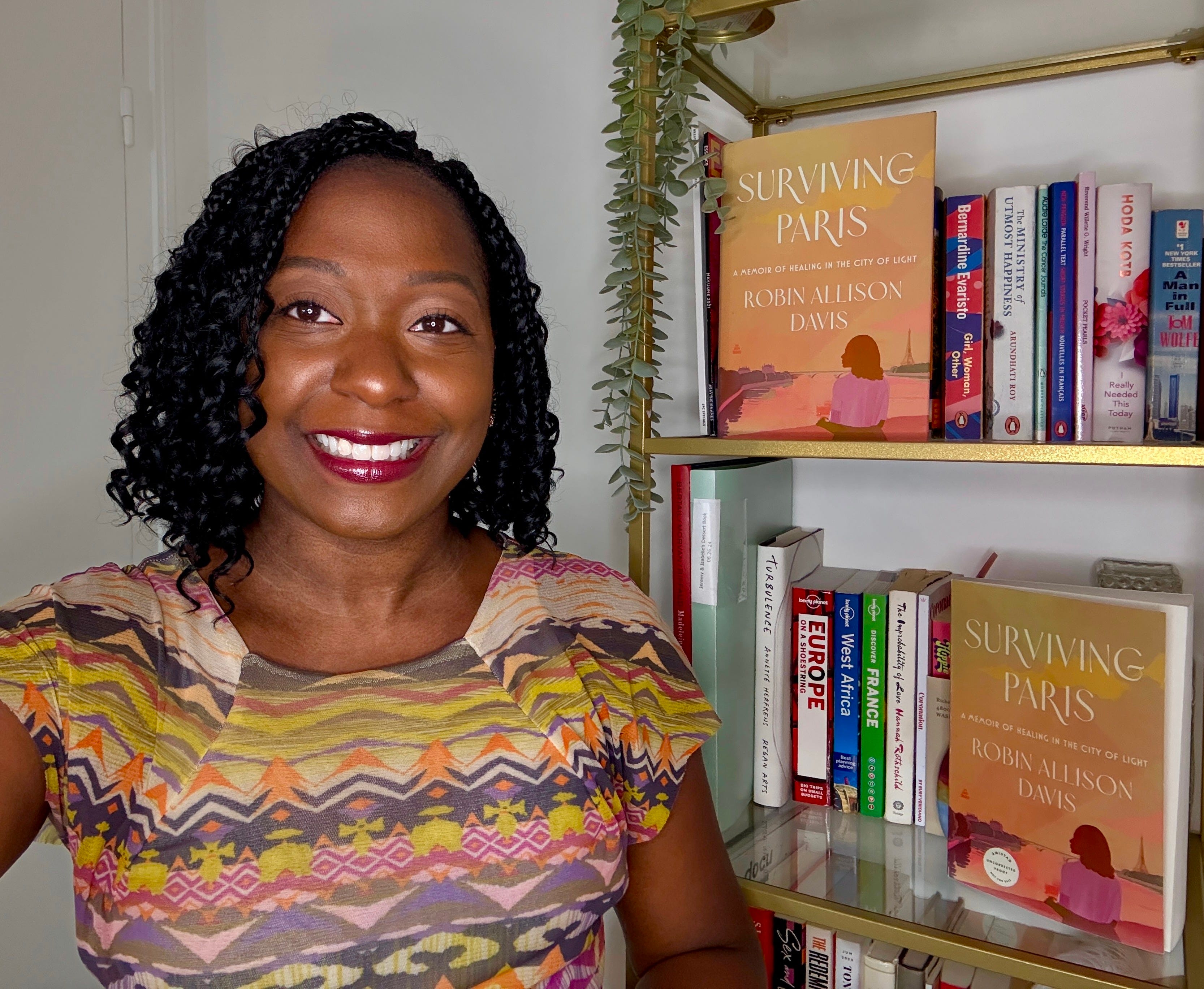
On September 16th, 2025, almost 3 months from now, my debut memoir, Surviving Paris: A Memoir of Healing in the City of Light, will be published. I have no idea what to expect, but I hope that the book will be well-received. It’s my baby, my true labor of love.
You can pre-order Surviving Paris here.
Want to host a book event? Reach out to me here.
Win a copy of my book via my GoodReads Giveaway here. (US only)
You can request the book on NetGalley here.
I hope this post was helpful. If there are other aspects of my author journey and/or writing you'd like me to cover, feel free to let me know in the comments!
Before you go, here are a few things to check out this month!
Fête de la Musique, the all-night musical party across France, is on June 21st, 2025. Check out POPOUT Magazine’s Paris Fete de la Musique map for events!
The Black Womxn Writers in Europe Retreat extended their deadline to June 15th.
Robin! So excited for your upcoming memoir…I would love to hear about the writing process. Congratulations again!!
Hi Robin! Huge congrats on your new book. I can’t wait to get a copy!
I just came across this post and found it so insightful as I’ve just began the querying process (for a Paris-based book as well!) If you don’t mind sharing, I’d be interested to hear how long it took you to receive a response from those agents interested in your proposal. There’s such a wide range of response times and I’d love to hear your personal experience!